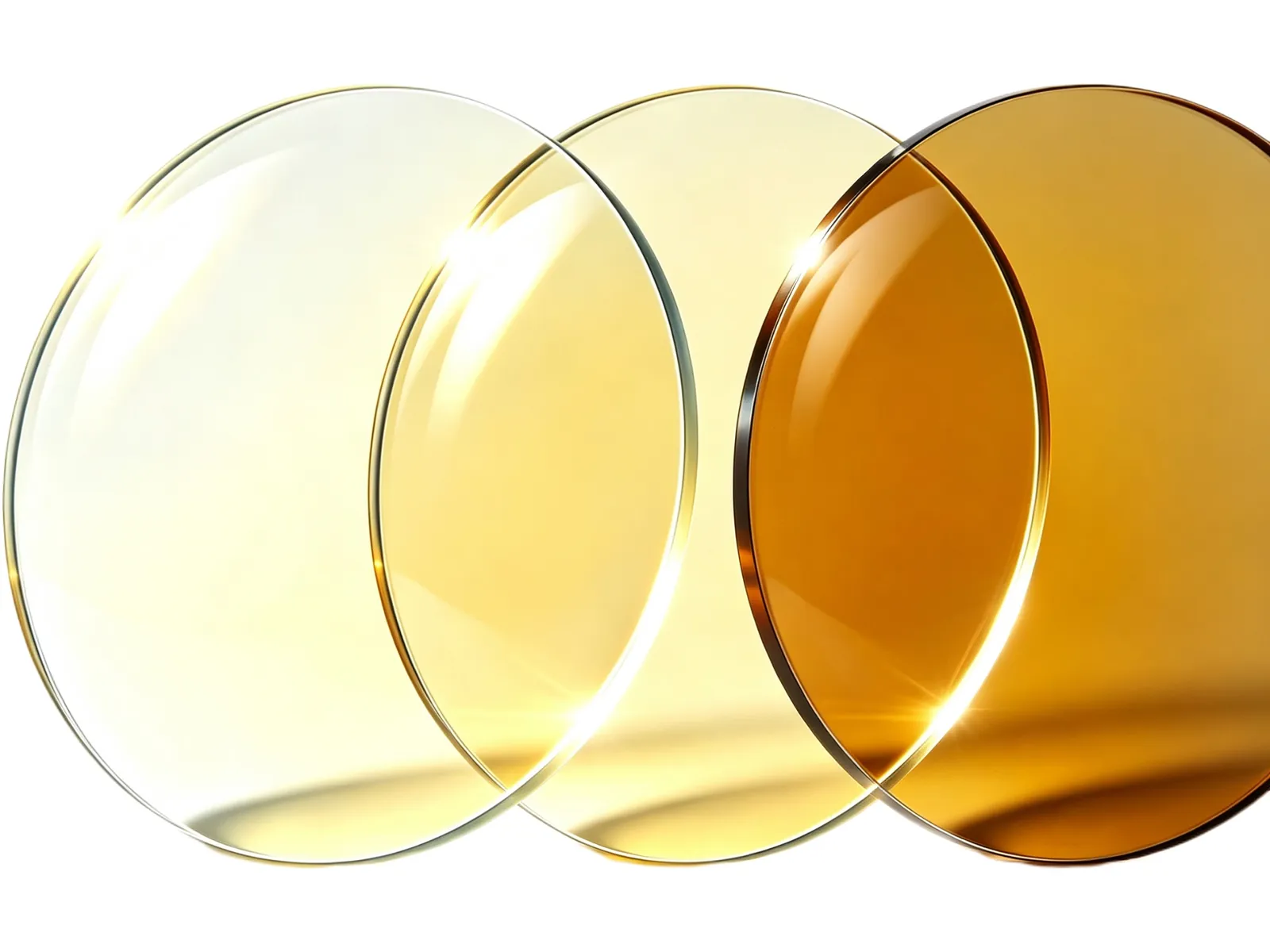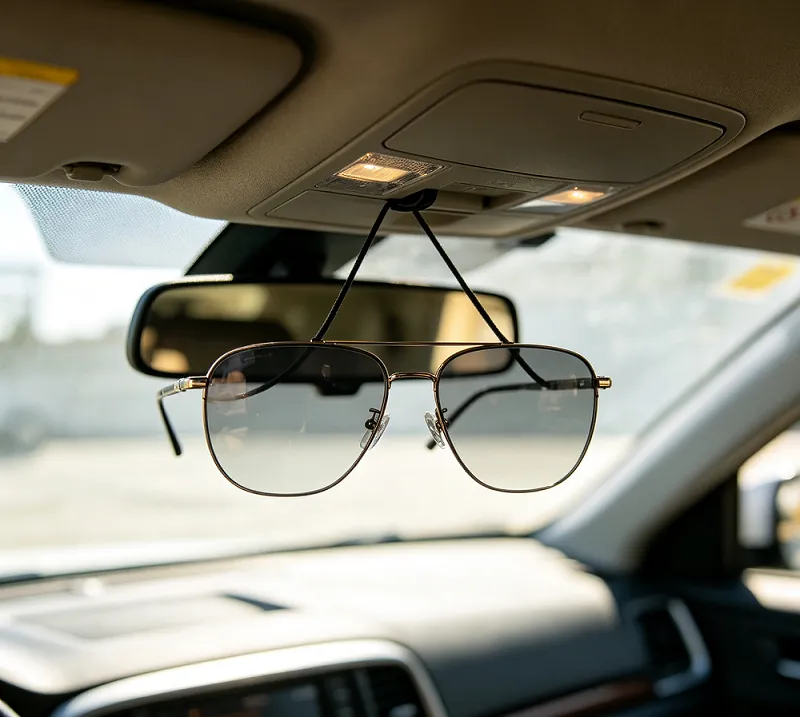
Photochromic lens selection starts with where the wearer needs the lens to change. Kexin Optics lists UV-responsive lenses for indoor and outdoor transitions, alongside visible-light-responsive driving lenses intended to darken inside vehicles. For an eyewear buyer, identifying that environment first is more useful than choosing a material, colour or coating before the application is clear.
For an everyday optical frame, consider the UV-responsive range. For a frame intended for frequent car travel, discuss the driving range and assess samples in the intended vehicle. Both options have a light base tint indoors; neither should be specified as completely colourless without checking the sample.
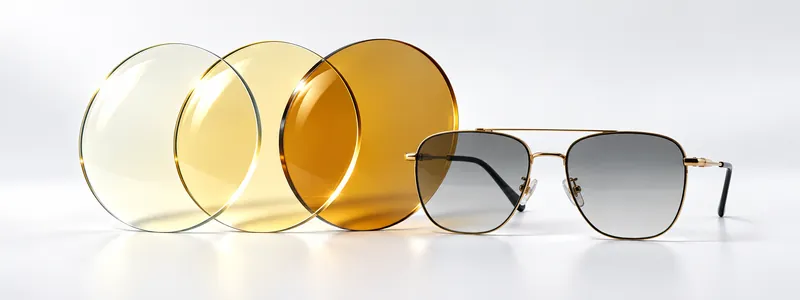
Choose photochromic activation for the intended environment
The UV-responsive photochromic lenses darken as ultraviolet intensity increases outdoors. After the wearer returns indoors, they gradually fade towards their light base tint. The range includes custom prescription powers for myopia and is intended for commuting and outdoor travel where a single pair can cover changing environments.
The photochromic driving lenses use visible light to activate the colour change. This addresses a different requirement: a vehicle windshield can restrict the ultraviolet light available to activate a conventional UV-responsive lens. The driving option is listed for optical frames and for transitions between indoor, vehicle and outdoor environments.
Do not transfer an observation from one range to the other. The catalogue does not state a single darkening time, final tint or fading time for every configuration. Ask for the response information relevant to the selected lens and use a sample to check the environments important to the proposed eyewear.
Match the lens to the frame and prescription
Confirm the frame model, lens outline and intended prescription before discussing a finished appearance. The driving range lists multiple substrate options and semi-finished blanks that support turning and contour cutting. It can be processed for myopia, presbyopia and other corrective powers. Those options should be discussed against the actual prescription and frame, rather than assumed for every stock sample.
Provide a drawing or physical frame sample when fit is important. State whether you need finished lenses or blanks for further processing, and identify who will carry out the remaining work. A sample that demonstrates colour change does not, by itself, confirm the final contour, edge treatment or prescription configuration.
Hard coatings and water- and oil-repellent coatings are listed for the driving range. Treat these as separate specification choices. Ask which combination is available for the selected substrate and processing route, then include the agreed combination in the sample request.
Assess a sample with a consistent comparison
Start by looking at the indoor base tint, then compare the outdoor appearance under the conditions relevant to the wearer. For the driving option, add an assessment inside the intended vehicle. Record the sample identity and the conditions used, so that different buyers or colleagues do not compare unrelated observations.
Check the appearance after the lens returns indoors, as well as its darker appearance. A useful review considers the complete transition and the wearer's normal environment. Record any concern about tint, colour balance or viewing comfort and discuss it before agreeing the order specification.
Keep visual assessment separate from a numerical requirement. If a project needs a stated light-transmission range or response measurement, put that requirement in the enquiry and ask what information can be supplied. The public product description does not replace configuration-specific measurements.
Prepare a photochromic lens enquiry
- Specify everyday indoor/outdoor use or frequent in-vehicle use.
- Identify the frame, lens drawing and prescription requirements.
- State finished-lens or semi-finished-blank requirements.
- Describe the preferred indoor base tint and darker appearance.
- List requested coatings, sample quantity and order quantity.
Use the Photochromic Lenses collection to compare the two product directions, then send your requirements to Kexin Optics. A clear application brief allows the enquiry to focus on the appropriate activation type and a sample configuration that can be assessed before ordering.