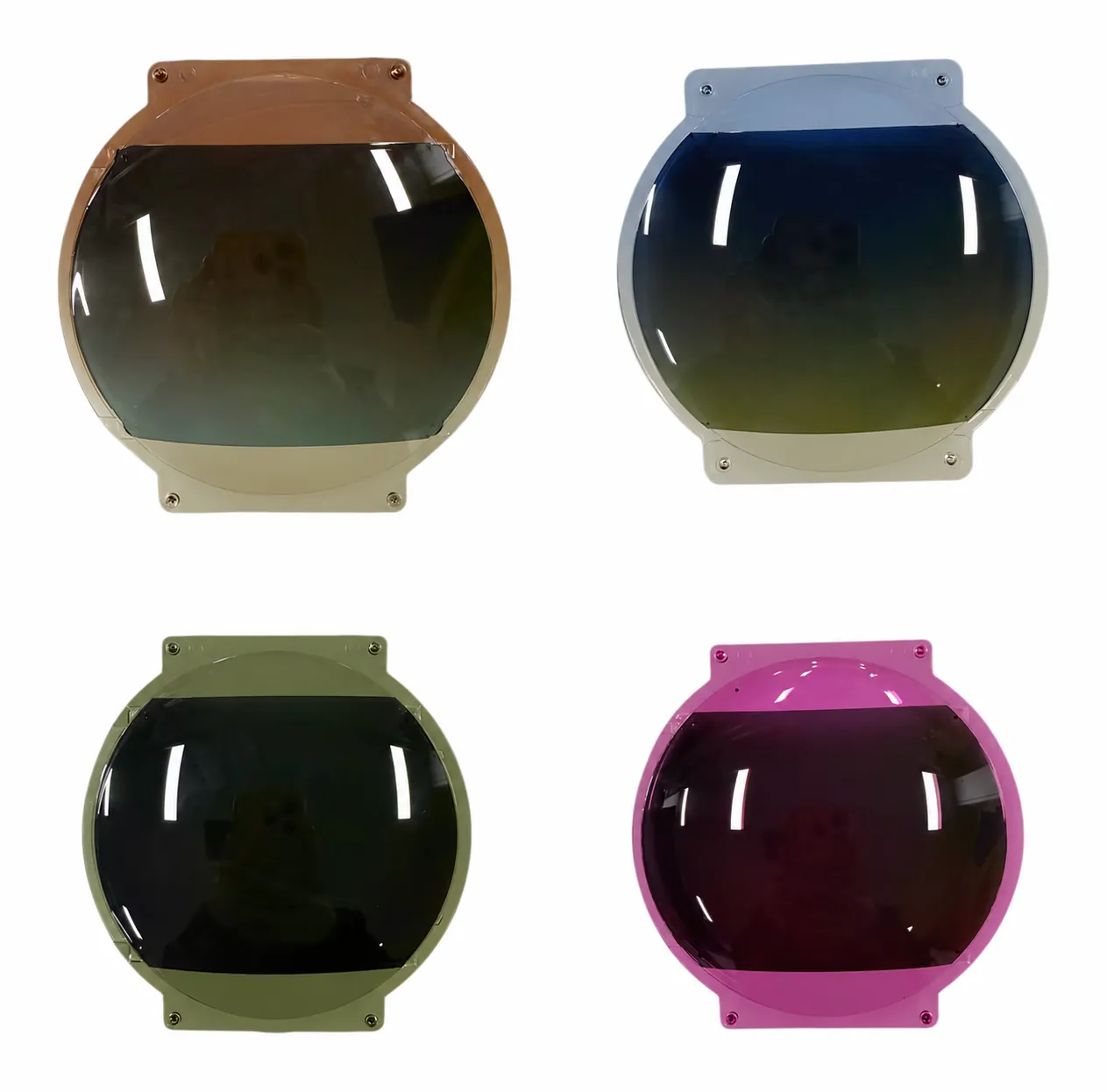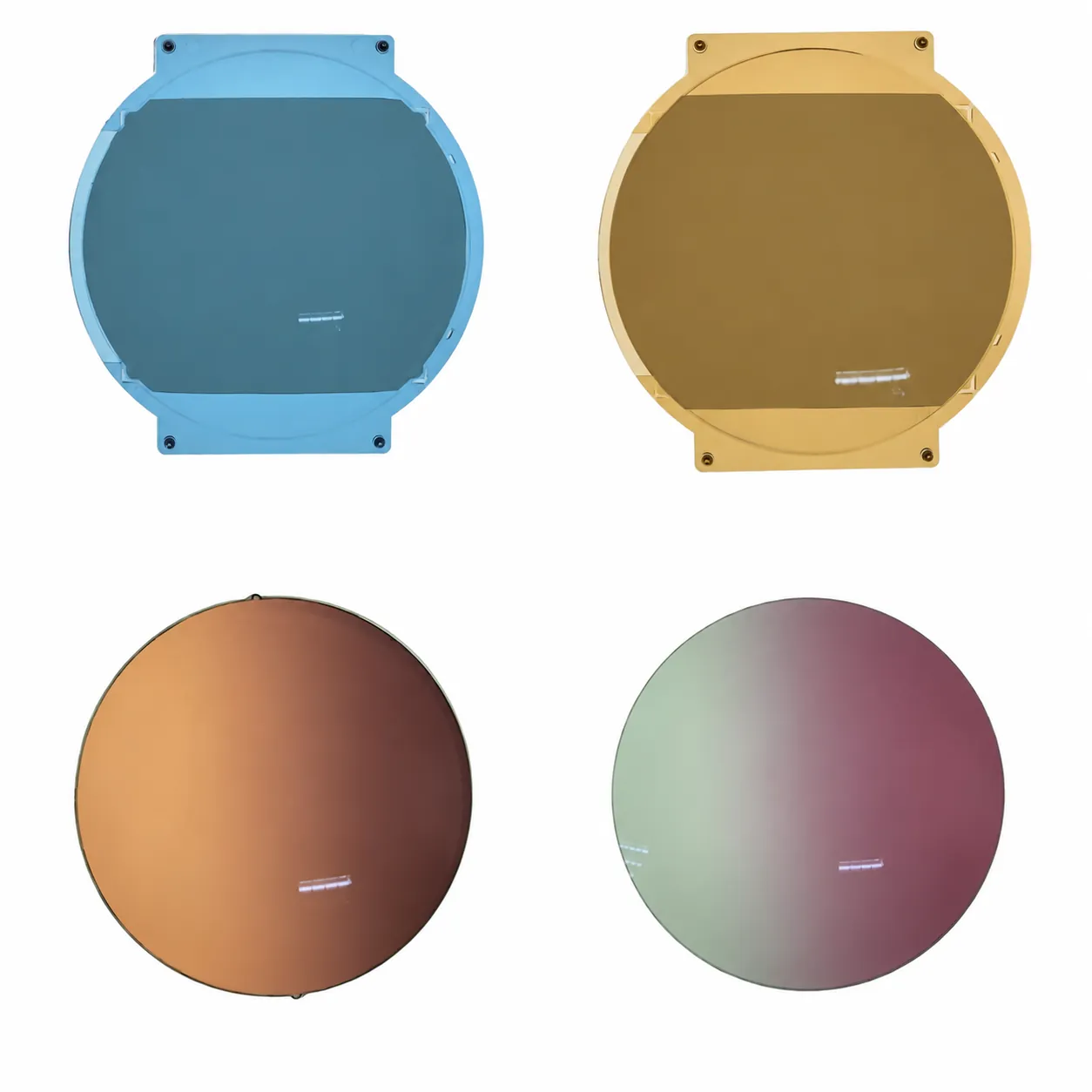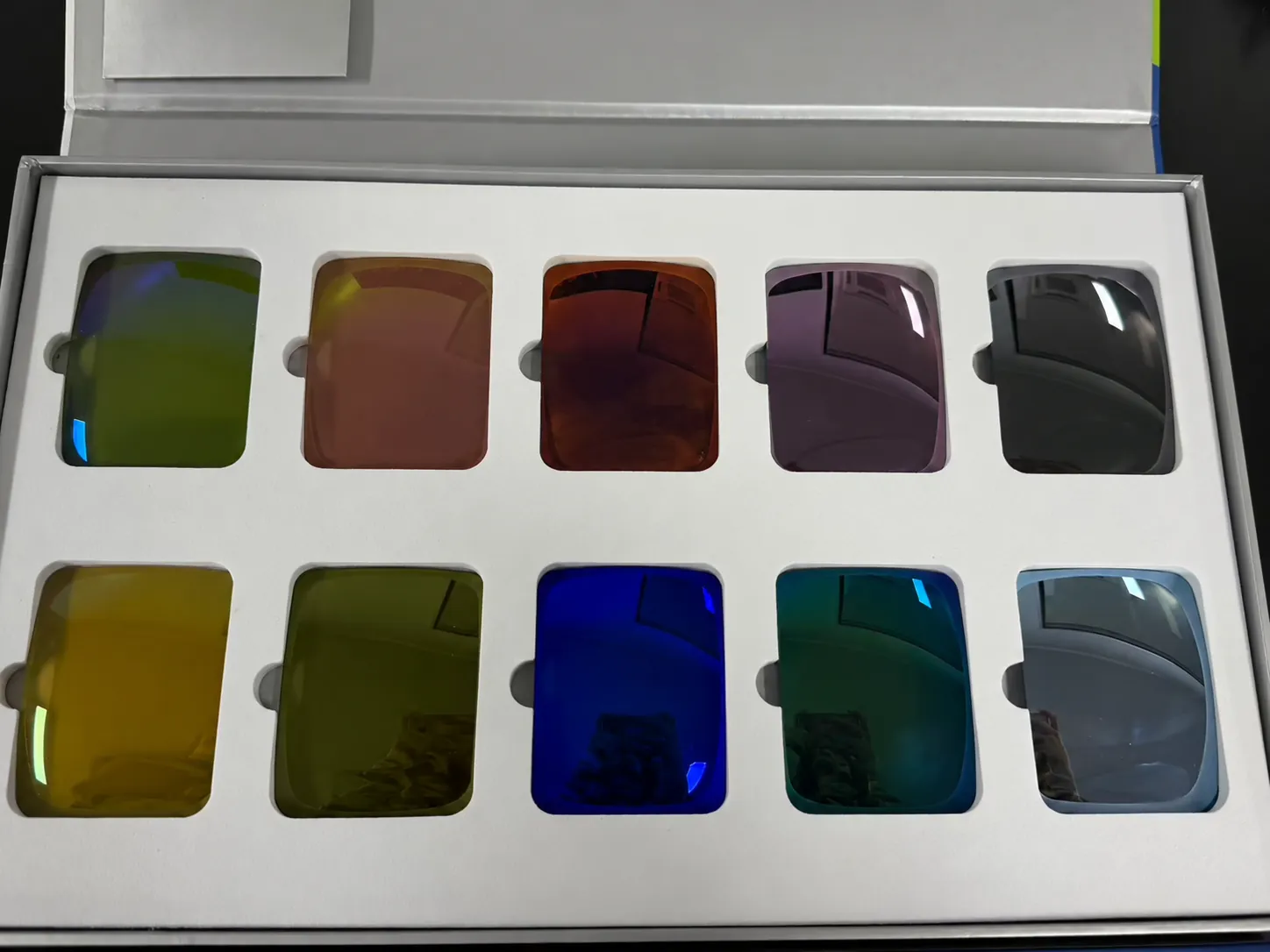
Polarized sunglass lens choices should be compared as complete configurations: substrate, lens shape, tint, finish and processing stage. Kexin Optics lists PC, nylon and TAC polarized options. For a buyer developing sunglasses, the useful question is which listed option fits the proposed frame and application, followed by which details need confirmation in a sample.
Polarization and appearance are separate parts of that decision. A tinted or mirrored lens should not be identified as polarized from its colour alone. The PC and TAC product descriptions explicitly list a built-in polarizing layer, while the nylon product is listed in the polarized range with its own tinting and cutting options.
Compare the listed polarized material options
The PC polarized sunglass lenses combine a PC substrate with polarizing film. Their product description lists through-substrate tinting, a built-in polarizing layer and use in outdoor sports sunglasses, including driving, fishing and cycling. Its PC substrate is described as impact resistant. Confirm the exact lens configuration against the intended frame and use.
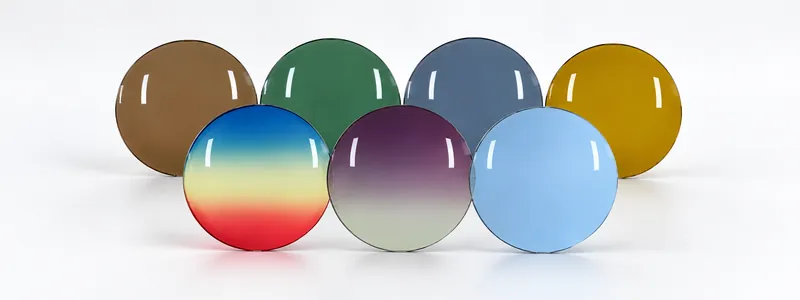
The nylon polarized sunglass lenses are described with uniform, saturated through-substrate colours, solid tints and gradients. They can be cut for fashion sunglasses, and the substrate is described as lightweight and tough. Ask about the selected colour and lens contour together, particularly when developing a frame with a distinctive shape.
The TAC polarized sunglass lenses use cellulose triacetate and are listed as finished lenses and semi-finished blanks. Their built-in polarizing filter is described as reducing reflected glare from roads and water. This product also lists UV400 protection, tint and mirror options, and additional functional coatings.
These descriptions identify useful starting points rather than a universal ranking. No single material should be called the best for every sunglasses project. Compare the actual lens configuration against the frame, intended use, sample appearance and remaining processing work.
Specify tint and finish independently
Begin with the base tint: a solid colour or a gradient. Then state whether a mirror appearance is required. The PC and TAC listings include colourful mirror finishes, while the nylon listing provides solid and gradient tint directions. A desired finish shown on one product should be checked for availability on another product rather than copied into the specification automatically.
Use a physical colour reference when possible. A digital photograph is useful for direction, but it does not establish an exact finished tint or mirror effect. Keep the sample identity in the discussion and describe the features that matter: colour family, gradient placement, saturation and the exterior appearance in the intended frame.
For TAC, hard coatings and water- and oil-repellent coatings are listed as available additions. Ask for the complete proposed finish combination. A mirror finish, a polarizing layer and an easy-clean coating serve different specification purposes, so each should appear separately in the enquiry.
Confirm processing stage and frame fit
State whether the enquiry is for a finished lens or a blank that will receive additional processing. The TAC listing explicitly supports contour cutting of semi-finished blanks; the nylon listing describes cutting for fashion sunglasses. Confirm the corresponding supply form and processing arrangement for the selected product.
Share the frame sample or lens drawing, including the required outline and mounting details. Evaluate sample fit before approving a colour alone. A successful appearance review does not confirm that the same lens configuration has been checked in every alternative frame.
Build a useful polarized lens sample request
- Identify PC, nylon or TAC as the material direction.
- Describe the sunglasses frame and intended application.
- Specify solid or gradient tint and any mirror finish.
- List requested functional coatings separately.
- Provide the processing stage, sample quantity and order quantity.
Contact Kexin Optics with your polarized lens requirements and the relevant product references. Comparing agreed samples with the same frame and review criteria gives the buying team a clearer basis for selecting the final material, tint and finish.